

College Dorm Bathroom Essentials: What Students Actually Need in 2026
Affiliate disclosure: UniversityParent may earn a commission from qualifying purchases made through links on this page, at no additional cost to you. We select products based on dorm usefulness, published specifications, availability and fit for the use cases described here.
The essential dorm bathroom list depends on one thing: whether your student has a communal hall bathroom or a suite or private bathroom. Students using a shared hall bathroom usually need a shower caddy, shower shoes, quick-dry towels, toiletries and something easy to wear between the bathroom and their room. Students with a suite or private bathroom need fewer portable items but may need cleaning supplies, hand soap, a bath mat and other basics the residence hall does not provide.
Before buying anything, check the student’s exact residence hall. Bathroom layouts, and what the college supplies, can differ even within the same university.
Dorm Bathroom Essentials Checklist: Communal vs. Suite Bathrooms
Bathroom type decides most of the list. This table shows what each item is usually worth to a student in a shared hall bathroom, what it is worth in a suite or private bathroom, and whether to buy it before move-in or wait until the bathroom has been seen.
| Item | Communal / hall bathroom | Suite / private bathroom | Buy before move-in? |
|---|---|---|---|
| Shower caddy | Usually useful | Usually unnecessary | Yes |
| Shower shoes | Usually useful | Usually unnecessary | Yes |
| Quick-dry towels | Usually useful | Usually useful | Yes |
| Robe or towel wrap | Usually useful | Depends on preference | Yes, if wanted |
| Toiletry bag or hanging organizer | Usually useful | Useful where counter space is tight | Yes |
| Toothbrush storage | Usually useful | Depends on preference | Yes |
| Shampoo, conditioner, body wash | Usually useful | Usually useful | Yes |
| Bath mat | Usually unnecessary | Bring unless provided | Verify residence hall |
| Hand soap | Usually supplied, verify | Bring unless provided | Verify residence hall |
| Cleaning supplies | Usually unnecessary | Usually useful | Verify residence hall |
| Toilet brush | Usually unnecessary | Bring unless provided | Buy after move-in |
| Plunger | Usually unnecessary | Bring unless provided | Buy after move-in |
| Bathroom trash can | Usually unnecessary | Bring unless provided | Buy after move-in |
| Bathroom storage and shelving | Depends on room layout | Depends on bathroom layout | Buy after move-in |
Before buying: check the specific residence hall’s furnishings and bathroom information. Universities may have communal, pod, suite and private bathroom layouts in different buildings, and a school-wide packing list will not tell you which one your student got.
Communal Dorm Bathroom Essentials
A communal or hall bathroom is shared by a floor or a wing, cleaned by campus custodial staff, and reached by walking down a hallway. Everything your student uses has to travel there and back, which is what drives the list.
Buy before move-in
- Shower caddy
- Shower shoes
- Two bath towels
- Robe or towel wrap, if your student wants one
- Shampoo, conditioner, body wash, face wash and any shaving supplies actually used
- Toiletry bag or organizer for the items that do not go into the shower
- Toothbrush storage
- Hair and shower products your student genuinely uses at home
Worth considering
- A hanging toiletry bag for skin care and grooming items, separate from the wet shower caddy
- A caddy with a hanging hook, if the shower stall has a rail or hook to use
- A small mirror for the room, so basic face care does not require a sink at peak hours
- An inexpensive drying surface for the wet caddy when it comes back to the room
Usually unnecessary for a communal hall bathroom
- Bath mat
- Toilet brush
- Plunger
- Shower curtain
- Bathroom trash can
- Large countertop storage
Those items belong to the building, not the student, in a hall bathroom setup. Custodial staff handle cleaning and stocking of shared fixtures. If your student wants to wipe a sink or a toilet seat before use, a small pack of disinfecting wipes kept in the room covers it without buying a cleaning kit.
Suite or Private Dorm Bathroom Essentials
A suite bathroom is shared with a small number of roommates or suitemates, and a private bathroom belongs to one room. In both cases the students living there usually own the cleaning and the restocking, which is the real difference from a hall bathroom.
Depending on what housing supplies, your student may need:
- Bath mat
- Hand soap
- Bathroom trash can
- Cleaning supplies
- Toilet brush
- Plunger
- Toilet paper, if it is not supplied
- Shared storage for products that live in the bathroom
- A shower curtain or liner, only if housing does not provide one
Do not automatically purchase these before confirming what the residence hall already supplies. Many suite-style buildings provide a shower curtain, a trash can or both, and some include an initial supply of toilet paper. Duplicates of any of them are wasted money and wasted space in a small room. This is also a good conversation for your student to have with suitemates before move-in, so four people do not each arrive with a plunger.
One email a week, for parents doing this right now
The deadlines, checklists, and conversation scripts that actually matter at each stage of the year. Free, and you can unsubscribe anytime.
Looking for the free toolkits? They are on our resources page, no email required.
Our Dorm Bathroom Picks at a Glance
These are the purchases that solve the most common shared-bathroom problems. Everything else on the checklist below is either already in your house or better bought after your student sees the room.
| Pick | Best for | Key feature | Buy now or wait? | Amazon |
|---|---|---|---|---|
| HESPER Mesh Shower Caddy | Communal hall bathrooms | Mesh drains and dries, plus a hook and soft handles | Buy now | See current price |
| shevalues Shower Shoes | Any shared shower floor | Quick-drying slide with arch support | Buy now | See current price |
| JML Microfiber Bath Towels, 2 pack | Rooms with nowhere good to hang a towel | Microfiber, 30 by 60 inches, two per pack | Buy now | See current price |
| Turquaz Waffle Kimono Robe | The walk between room and hall bathroom | Unisex sizing, lightweight waffle knit | Buy now, if wanted | See current price |
| BAGSMART Hanging Toiletry Bag | Grooming and skin care, not shower products | Hanging hook and water-resistant lining | Buy now | See current price |
Shower Caddies: What to Look For
A shower caddy is the single most useful purchase for a student in a hall bathroom, because it is how everything gets from the room to the shower and back without being carried in both arms. Students with a suite or private bathroom generally do not need one.
What actually matters when choosing one:
- Drainage. Water needs to run out rather than pool in the bottom. Mesh and open-bottom designs handle this; solid-bottom trays hold water.
- Usable compartments. Enough separate sections for shampoo, conditioner, body wash, face wash and a razor without everything stacking on top of itself.
- Carrying comfort. It gets carried one-handed, wet and full. Soft handles or a shoulder strap make a real difference.
- Drying ability. A caddy that is still damp the next morning is the one that starts to smell.
- Ease of cleaning. It should rinse out under the shower and wipe clean.
- A hanging option, if the shower stall has a rail or hook. Getting the caddy off the shower floor is the biggest single upgrade in a communal bathroom.
The three common styles:
Mesh. Portable, light and generally easy to dry, which is why it is the default recommendation for hall bathrooms.
Plastic. Easy to rinse and wipe clean, and sturdier for heavy bottles, though heavier to carry and slower to dry if the base is solid.
Hanging caddy. Useful where the shower setup provides a hook or rail that will hold it. Check the stall before assuming there is one.

Best for a communal hall bathroom
HESPER Mesh Shower Caddy for College Dorm
Why it fits: mesh construction drains and dries between showers, and the built-in hook lets it hang in the stall instead of sitting on a wet floor.
What to check: confirm the shower stall actually has a rail or hook, otherwise the hook is unused and the soft handles do the work.
One alternative worth considering. If your student carries a lot of bottles, the EUDELE mesh shower caddy uses a nine-pocket layout instead of a few large compartments, which keeps taller items upright. It is the same mesh-and-drawstring idea, organized differently. One caddy is enough; there is no reason to buy both.
Where Does the Wet Shower Caddy Go?
A caddy that comes back from the shower every morning drips on whatever it is set down on. In a room with a wood desk, a laminate dresser and carpet, that turns into water rings and a persistently damp corner within a few weeks.
The fix is a dedicated landing spot. Practical options, cheapest first: a folded washable towel your student already owns, an absorbent drying mat, a boot or shoe tray with a lip that contains the water, or a quick-dry stone mat as an upgrade. Any of them beats setting a wet caddy directly on furniture.

Budget option
S&T INC. Dish Drying Mat, 18 by 24 inches
Why it fits: this is sold as a kitchen dish drying mat, which is exactly why it works here. The same absorbent microfiber gives a dripping shower caddy a washable landing pad on a dresser or desk, and it goes in the laundry with everything else. You are buying it for the material, not the label on the box.
What to check: it holds the water rather than evaporating it quickly, so it needs to be hung or laundered regularly.

Upgrade option
Foldable Diatomaceous Stone Quick-Dry Mat
Why it fits: a stone mat absorbs and releases water quickly, so it does not stay soggy the way a fabric mat can in a room with poor airflow.
What to check: it costs noticeably more than a towel or a fabric mat, and it is rigid, so measure the surface it will sit on.
Shower Shoes: Why They Matter in a Communal Bathroom
Shower shoes are worth buying for any student using a shared or communal shower. Waterproof sandals reduce direct skin contact with communal wet floors, where fungal infections such as athlete’s foot can spread. The CDC lists using public showers or locker rooms without protective footwear among the risk factors for ringworm infections, a group that includes athlete’s foot (tinea pedis). Students with a private bathroom used only by them do not need a separate pair.
What to look for:
- Quick drying. Solid rubber or EVA rather than fabric or foam that stays wet.
- Slip-resistant sole. Wet tile is the actual hazard in a shared bathroom.
- Comfortable fit. They are worn in the shower and on the walk back, so a sandal that stays on the foot when wet is worth more than a fashionable one.
- Easy cleaning. They should rinse off and dry between uses.
Keep them designated for shower use rather than doubling as everyday campus sandals, and let them dry between showers instead of leaving them sealed in a bag.

Best for a shared shower floor
shevalues Shower Shoes with Arch Support
Why it fits: a quick-drying slide with a contoured, arch-supported footbed, sold in both women’s and men’s sizing.
What to check: sizing runs by listed size chart rather than standard US shoe size, so check the chart before ordering.
Towels and Robes
How Many Towels Does a College Student Need?
Our practical recommendation: two bath towels. One can be in use while the other is drying or being washed. A third is reasonable if your student does laundry infrequently, and more than that takes up storage space out of proportion to the benefit in a room this small. One or two hand towels are useful if the room has its own sink.
Drying speed matters more in a dorm than plushness, because most rooms have no towel bar and poor airflow. A towel that is still damp the next morning is the one that starts to smell.
Cotton. Familiar feel and good absorbency, and what most students are used to. The tradeoff is bulk and slower drying.
Microfiber. Compact and often faster drying, which suits a room with nowhere good to hang a towel. Some students dislike the texture against skin, so it is worth checking before buying a set.
Waffle weave. Compact and another quick-drying option, and a middle ground for students who do not like microfiber.

Best for a room with no towel bar
JML Microfiber Bath Towels, 2 Pack, 30 by 60 inches
Why it fits: two full-size towels in one purchase, in a microfiber that packs down small and dries faster than cotton terry.
What to check: microfiber feels different from cotton, so if your student is particular about towels, buy one set before committing.
Robe or Towel Wrap for a Communal Dorm Bathroom?
Both solve the same problem: getting from the shower back to the room while carrying a caddy, without holding a towel closed the whole way. Which one is better comes down to preference.
A robe gives more coverage and is the better choice for a longer walk between the room and the bathroom, or for a floor where your student would rather be fully covered in the hallway. It also doubles as something to wear in the room.
A towel wrap is more compact and more convenient in the moment right after showering, since it fastens and stays put. It takes up less space in a small closet.
Neither is essential in a suite or private bathroom, where the path from shower to room is short and private.

Best for the walk down the hall
Turquaz Lightweight Waffle Knit Kimono Bathrobe
Why it fits: unisex sizing and a lightweight waffle knit that dries faster and stores flatter than a plush fleece robe.
What to check: waffle knit is thinner than fleece, so a student who wants a warm robe for the room may prefer a plush fleece robe instead, which is sold in women’s sizing.
Toiletries and Organization
Shower Caddy vs. Hanging Toiletry Bag
These are two different jobs, and students in communal bathrooms often end up wanting both.
A shower caddy is for what goes into the shower: shampoo, conditioner, body wash, face wash, a razor. It gets wet every day and needs to drain.
A hanging toiletry bag is for what happens at the sink: skin care, cosmetics, shaving products, contact lens supplies, smaller grooming items. It hangs from a hook or the back of a stall door, which matters when there is no counter space to set anything down.
If your student is buying one, buy the caddy first. The toiletry bag is the second purchase, and it is the one most packing lists leave out.

Best for grooming and skin care
BAGSMART Toiletry Bag with Hanging Hook
Why it fits: a water-resistant bag that hangs from a hook or door, so nothing has to be set down on a shared counter.
What to check: it is not a shower caddy, and it is not meant to hold dripping bottles, so it works alongside a caddy rather than replacing it.
Storage Inside the Room
Most students keep the bulk of their toiletries in their room rather than in the bathroom, because counter space in a shared bathroom is limited and anything left there tends to disappear. An over-door organizer with clear pockets is the highest-value storage purchase for this, since it uses vertical space that is otherwise wasted and keeps everything visible. For the rest of the room, see our guide to dorm storage solutions.
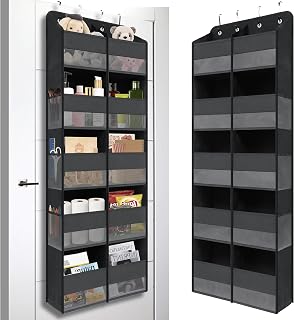
Best for bathroom products stored in the room
Giraffe Creation Over-Door Organizer, 10 Clear Pockets
Why it fits: clear pockets make products findable without digging, and it uses door space rather than the desk or dresser.
What to check: some residence halls restrict what can hang on a door, and door thickness varies, so confirm both before move-in.
A Small Mirror for the Room
If the hall bathroom is busy in the morning, a small mirror in the room lets your student do basic face care, contacts or makeup without waiting for a sink. This is a small purchase that removes a daily friction point, and it is easy to skip when packing.

Best for beating the morning sink rush
JOYOEIKON Tabletop Mirror with Bamboo Tray
Why it fits: a compact desk mirror that rotates, with a tray base that holds the small items that otherwise scatter across a dresser.
What to check: one side is magnified, which some students find disorienting for everyday use.
Shampoo, Conditioner and Body Wash
Whatever your student already uses works. Two practical adjustments for a communal bathroom: large bottles take up most of a caddy, so keep the big bottles in the room and carry smaller refillable ones, and bar soap needs a draining case if it is going to travel to a shared shower.
Washcloths and Body Scrubbers
Whatever your student uses should rinse clean and have a chance to dry between showers. A washcloth, a body scrubber or whatever they already use at home is fine. The only thing worth changing is where it lives: hanging in the caddy rather than sitting in a puddle at the bottom of it.
Oral Care
Toothbrush, toothpaste, floss and mouthwash, plus a retainer case if your student wears one. For a communal bathroom, a ventilated toothbrush cover or travel case can make carrying and storing the toothbrush easier. Allow the brush to dry between uses rather than sealing it wet in a closed container.
If your student already uses an electric toothbrush, there is usually no reason to switch simply because they are moving into a dorm. Check outlet access near where it will be stored, and store it so it can dry between uses.
Skin Care
Keep it simple at first. A cleanser, a moisturizer and a sunscreen cover the fundamentals. Water chemistry, humidity, sleep disruption and stress all change in the first semester, so it is easier to adjust based on what the skin actually does at school than to arrive with an elaborate routine. For a hall bathroom, decanting into smaller containers keeps the toiletry bag manageable.
Hair Care and Styling Tools
Hair dryer, straightener and curling iron policies vary by residence hall. Check the school’s current appliance rules before buying a new styling tool specifically for the dorm, because some buildings restrict heat-styling tools in rooms entirely and designate bathroom outlets for them instead. Our dorm appliance rules study covers how these policies differ across schools, and our guide to dorm power strip and surge protector rules covers what your student can safely plug them into.
One low-tech note: elastic hair ties are among the most-lost items in a dorm. Pack more than seems necessary.
Health Supplies
Keep medications, a thermometer and basic first-aid supplies in the student’s room rather than in a shared bathroom, where items go missing and heat and humidity are worse for storage. See our college medicine cabinet guide for the complete checklist. If your student takes prescription medication, plan the supply and a secure storage spot in the room before move-in.
Dorm Bathroom Items You Probably Don’t Need
Most bathroom over-packing falls into a few predictable categories.
- Excessive towels. Two bath towels and a hand towel or two covers a normal laundry cycle. Six towels is storage space spent on nothing.
- Oversized toiletries for a communal bathroom. Family-size bottles do not fit a caddy. Keep them in the room and refill smaller bottles.
- Bathroom furniture bought before measuring. Over-toilet shelving and freestanding racks depend entirely on a layout nobody has seen yet.
- Duplicate cleaning supplies. In a suite, four students each bringing a full cleaning kit means three go unopened all year.
- Breakable glass containers. Glass and a wet tile floor are a bad combination, and some housing contracts prohibit glass in bathrooms.
- A full medicine cabinet’s worth of products. Bring what is actually used, not everything that has accumulated in the bathroom at home.
- A shower curtain before confirming one is needed. Communal bathrooms have their own, and many suite bathrooms come with one.
- Full-size organizers before seeing the space. Countertop organizers assume counter space that may not exist.
For the broader version of this list across the whole room, see our guide to what not to buy for a dorm.
Bathroom Items to Wait Until Move-In to Buy
These are the items where guessing costs money. Each one depends on the room’s actual layout or on what housing already supplies, and none of them is hard to buy locally in the first week. Most of it also arrives fast online once the room has been seen, which is one reason it helps if your student has their own discounted Prime membership rather than borrowing yours.
- Shower curtain and liner. Communal bathrooms have their own, and many suite bathrooms come with one. Sizing also varies with the tub or stall.
- Bath mat. Depends on the floor space outside the shower, which varies more than you would expect between suite layouts.
- Toilet brush and plunger. Only for suite and private bathrooms, and worth coordinating so suitemates buy one between them.
- Bathroom trash can. Some rooms and suites come with one, and the right size depends on where it can actually sit.
- Over-toilet shelving. Requires clearance measurements and is sometimes restricted by housing rules.
- Countertop organizers. Assume counter space that a given bathroom may not have.
- Adhesive storage and hooks. Residence halls differ on what can be stuck to walls and doors, and on what damage charges apply.
- Towel racks and hooks. Same rule, and where a towel can actually hang is not knowable until the room is seen.
- Large cleaning kits. Buy after the suite decides who is responsible for what.
Every one of these is available at a store near campus during move-in week. Buying them in August at home means paying to ship or transport things that may not fit. For timing across the whole shopping list, see our complete dorm shopping guide.
College Dorm Bathroom Checklist
Communal bathroom
- Shower caddy
- Shower shoes
- Shampoo
- Conditioner, if used
- Body wash or bar soap with a draining case
- Face wash
- Razor and shaving supplies, if used
- Two bath towels
- Hand towel, if the room has a sink
- Robe or towel wrap, if wanted
- Toothbrush and toothpaste
- Floss
- Toothbrush cover or travel case
- Toiletry bag for grooming and skin care
- Hair products and tools actually used
- Small mirror for the room, if useful
Suite or private bathroom, add if not provided
- Bath mat
- Hand soap
- Toilet paper
- Bathroom trash can
- Cleaning supplies
- Toilet brush
- Plunger
- Shower curtain and liner, if required
- Shared storage for bathroom products
Wait until you see the bathroom
- Large shelving
- Adhesive organizers
- Over-toilet storage
- Extra hooks
- Large countertop organizers
- Oversized cleaning supplies
You can pack for everything except the hard weeks
The College Parent Guide: Freshman Year (2026) is the handbook for those: the homesick call, the first bad grade, the roommate conflict, and telling the difference between a campus problem your student should handle and one that needs you.
Dorm Bathroom Essentials: Frequently Asked Questions
What bathroom essentials do college students need?
Most college students need a shower caddy, shower shoes, two quick-dry bath towels, a robe or towel wrap, toiletries, a toiletry bag and toothbrush storage. Students with a suite or private bathroom can usually skip the caddy and shower shoes but may need a bath mat, hand soap, a trash can and cleaning supplies instead.
What do you need for a communal dorm bathroom?
For a communal hall bathroom, buy a shower caddy, shower shoes, two bath towels, a robe or towel wrap, shampoo, conditioner, body wash, face wash, a toiletry bag and toothbrush storage. Skip the bath mat, shower curtain, toilet brush, plunger and trash can, because those belong to the building and are handled by campus custodial staff.
What do you need for a suite dorm bathroom?
For a suite or private bathroom, your student may need a bath mat, hand soap, a bathroom trash can, cleaning supplies, a toilet brush, a plunger and toilet paper, plus a shower curtain and liner if housing does not provide one. Confirm what the residence hall already supplies before buying any of it, and coordinate with suitemates so four people do not each bring a plunger.
Do I need a shower caddy for college?
Yes for a communal hall bathroom, where a caddy is how toiletries travel to and from the shower. Students with a suite or private bathroom generally do not need one, because their products can stay in the bathroom.
What type of shower caddy is best for a dorm?
A mesh caddy is the most practical choice for a communal bathroom, because it drains and dries between showers. Plastic caddies are easy to rinse and hold heavy bottles well. A caddy with a hanging hook is the best option when the shower stall has a rail or hook, since it keeps everything off the shower floor.
Are shower shoes necessary in college dorms?
Shower shoes are worth wearing in any shared or communal shower. They reduce direct skin contact with communal wet floors, where fungal infections such as athlete’s foot can spread, and the CDC lists using public showers or locker rooms without protective footwear among the risk factors for ringworm infections. A student with a private bathroom used only by them does not need a separate pair.
How many towels should a college student bring?
Two bath towels is our recommendation, so one can dry while the other is in use, plus one or two hand towels if the room has a sink. A third bath towel is reasonable for a student who does laundry infrequently. Quick-drying microfiber or waffle weave suits a dorm room better than thick cotton terry, because most rooms have no towel bar and poor airflow.
Does a dorm bathroom provide toilet paper and soap?
It depends on the residence hall. Communal bathrooms often have supplies managed by housing, while suite and private bathrooms may require residents to stock their own. Check the student’s specific residence hall.
Do students need cleaning supplies for dorm bathrooms?
Students with a suite or private bathroom generally do, because cleaning it is their responsibility. Students in a communal hall bathroom generally do not, since custodial staff clean it, though a small pack of disinfecting wipes kept in the room is useful for wiping a sink or seat before use.
Should I buy bathroom storage before move-in?
Wait. Over-toilet shelving, countertop organizers, adhesive storage and towel racks all depend on the room’s actual layout and on residence hall rules about what can be stuck to walls and doors. Buy them locally during move-in week once the space has been seen.
What bathroom items should you not bring to college?
Skip excessive towels, oversized toiletries for a communal bathroom, breakable glass containers, duplicate cleaning supplies in a suite, and any bathroom furniture or organizer bought before the space has been measured. Also skip a shower curtain until you have confirmed one is actually needed.
Last updated: August 2026. Residence hall bathroom configurations vary. Check your student’s specific housing assignment for bathroom setup and appliance policy. Source for shared-shower guidance: CDC, Ringworm Basics.