Affiliate Disclosure: UniversityParent earns a commission from qualifying purchases made through links on this page. This does not affect our recommendations — we only suggest products we believe are genuinely worth buying.
A comfortable, organized space helps students thrive.
The average college dorm room runs between 130 and 180 square feet — and that is shared between two people. Two beds, two desks, two wardrobes, two sets of everything, in a room smaller than most living room furniture arrangements. It sounds impossible, and yet students make it work every year. The difference between a functional, livable space and ongoing low-grade chaos is usually about $50 worth of well-chosen storage products.
The key is thinking in zones. There are three storage zones in nearly every dorm room: under the bed, the closet, and the desk area. Master those three and the room becomes manageable. Miss them and the floor becomes a storage unit.
This guide walks through each zone with specific product recommendations, plus a few universal purchases that apply everywhere. Before we get into products, though, there is one important step to take before ordering anything.
Measure Before You Order
Under-bed clearance varies enormously from school to school, and even building to building within the same school. In some newer residence halls with lofted beds, clearance can be 24 inches or more — enough for rolling drawers and substantial bins. In older buildings with standard bed frames, clearance might be 8 inches, which rules out most upright storage products entirely.
Ordering under-bed storage without knowing the actual clearance is a common and frustrating mistake. The products arrive, they do not fit, and now you are making returns during the chaos of move-in week.
Find out the room dimensions before buying. The school's housing office is the most reliable source — many publish room diagrams on their website under the housing or residence life section. The incoming class Facebook group for your student's school is also surprisingly useful: students who lived in the same building the year before will often know exactly how much clearance the beds have. Some schools even post photos of the actual rooms.
One email a week, for parents doing this right now
The deadlines, checklists, and conversation scripts that actually matter at each stage of the year. Free, and you can unsubscribe anytime.
The space under a dorm bed is the single most valuable storage square footage in the room. It is out of sight, it does not take up floor space, and in a room where every inch counts, it can hold a genuinely surprising amount.
For items you access occasionally — extra sets of bedding, off-season clothing, a spare pair of shoes, sentimental items from home — flat storage bins with lids are the right tool. Look for bins that fit your actual clearance measurement with a half-inch or more of room to slide in and out easily. Lids matter: open bins collect dust and pet hair, and a lid keeps everything inside clean and contained.
Under-Bed Storage Bins with Lids
Check your student’s dorm bed clearance before ordering. Most bins need 6-7 inches minimum. Lids keep dust out and are essential if you’re storing clothes or seasonal items.
For things you need to access regularly — snacks, extra school supplies, backup toiletries — rolling drawers are a better solution. Being able to pull out a drawer and find what you need without lifting a bin lid and digging around makes daily life noticeably easier. Rolling drawers also make it easy to shift the whole unit for cleaning, which dorm rooms need regularly.
Low-Profile Rolling Under-Bed Bins
Built for tight clearance, listed at about 5.4 inches tall with the wheels attached. That clears most standard dorm bed frames, but not all of them. Measure your student’s actual clearance before ordering, same as every other product on this page.
A practical tip: use the flat bins for anything that only comes out a few times a semester and the rolling drawers for restocking items you use weekly. This way you are not constantly moving bins around to find things.
Bed Risers and Loft Systems: Make Vertical Space
The single biggest way to create storage in a dorm is to lift the bed. There are two routes, and which one your student can use depends entirely on the school.
Bed risers are inexpensive plastic or steel cups that the bed legs sit in, raising the frame three to eight inches and turning the space underneath into real storage for bins, crates, or a rolling drawer cart. They are allowed almost everywhere and are the safest thing to buy ahead of move-in. Look for a set rated for the weight of a loaded bed, most list a capacity, and a height that clears whatever bins you plan to slide under.
Loft kits raise the bed much higher, to standing or desk height, opening room for a desk, futon, or dresser beneath it. Here is the catch: many schools provide or rent lofting through their housing office and prohibit third-party loft kits for safety reasons, and some beds already adjust to a lofted height at no cost. Confirm the specific building’s policy before buying anything, because a loft kit you cannot use is an expensive return and a banned one has to come right back home on move-in day.
Check the housing portal or email the housing office and ask three things: can the bed be raised or lofted, does the school provide or rent the equipment, and are personal bed risers or loft kits allowed. The answer tells you whether this is a purchase or just a form to fill out.
Once you know lofting is allowed, our step-by-step guide to lofting a dorm bed covers the tools, the safety rules, and Command strip weight limits for the space you open up underneath.
Parent Tip
Before you buy risers ahead of move-in, confirm what kind of bed the room has. Risers do nothing for a bed that is already lofted or bunked, and many adjustable dorm frames sit high enough that you will not need them. When the bed type is unknown, wait until move-in to buy risers so you are not returning a set you cannot use.
Over-Door Organizers: The Highest ROI Purchase
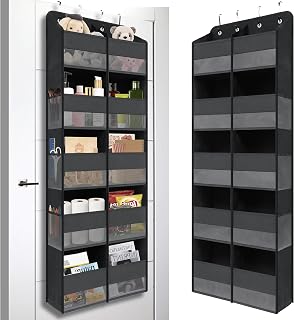
Over-Door Organizer 10 Pockets
$23
No tools or door damage. Ten pockets corral small stuff that usually ends up lost.
If you could only buy one storage item for a dorm room, the over-door organizer would be it. It turns the back of the door — a surface that is otherwise completely wasted — into usable storage without requiring any wall holes, screws, or permanent hardware. Most dorms are strict about wall damage, so finding storage that does not require installation is a genuine constraint.
The shoe-pocket style — a fabric panel with rows of individual pockets — is the most versatile. The pockets are deep enough to hold items well beyond shoes: toiletry bottles, cleaning supplies, a hair dryer, snacks, phone chargers, accessories, sunscreen. It can hold a remarkable amount while keeping everything visible and easy to grab.
Over-Door Organizer (Shoe Pocket Style)
24-pocket style is the most versatile — shoes on the bottom, small supplies up top. Fits most standard dorm doors without any hardware.
The pantry-style over-door organizer, which uses wire or mesh shelving tiers rather than pockets, works better for items that need a flat surface — a water bottle, small appliances, a coffee maker for the hall kitchen run. Whether you need one or both depends on the door width and what your student is storing.
Over-Door Pantry Shelf Organizer
Solid shelf-style over-door organizer holds heavier items (snacks, supplies). Better for closet doors than hollow-core doors.
One thing to check: some dorms have rules about over-door hooks, which can scratch or chip door frames. The fabric shoe organizers typically use a flat bar across the top rather than a hook, which is less likely to cause problems. Worth verifying with the housing office if you are unsure.
Closet Organizers: Doubling Usable Space
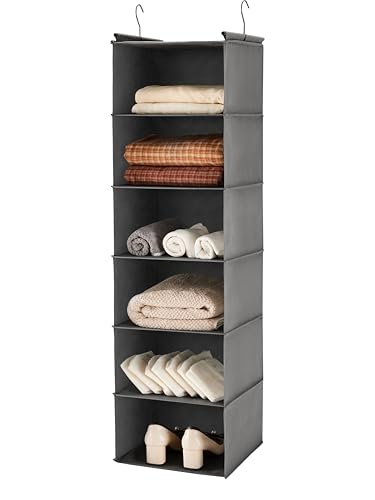
MAX Houser 6-Tier Hanging Closet Organizer
$12
Turns one closet rod into six shelves without any hardware.
Dorm closets are almost universally the same: a single hanging rod, maybe a shelf above it, and a floor. That is it. No built-ins, no drawers, no shelving unit. Students arrive with a full wardrobe's worth of clothing and discover that a single rod does not begin to cut it.
The hanging shelf divider is the most effective fix. These fabric shelves attach to the hanging rod and drop down below it, creating stacked cubbies for folded items — sweaters, jeans, gym clothes, extra linens — without taking up any additional floor space. A good set of three to four hanging shelves can effectively double the storage capacity of a bare closet.
Hanging Closet Shelf Organizer
Fabric hanging shelves drop off the closet rod and create 4-6 additional cubbies. No tools, no wall damage, and they pack flat at the end of the year.
Slim velvet hangers make a significant difference on the horizontal rod. Standard plastic hangers are about 2 inches wide; velvet hangers are half that and clothes do not slip off them. Replacing the plastic hangers that come with a clothing order with a 50-pack of velvet hangers can free up enough rod space to actually fit everything.
Space-Saving Hangers
Slim, space-saving hangers hold more in a tight closet and keep clothes from slipping off. A practical upgrade from the plastic hangers clothes ship on.
A hanging shoe organizer — the over-the-rod style that drops down in the closet — solves the floor-clutter problem that almost every dorm student develops within the first two weeks. Shoes on the closet floor turn into an obstacle course. Hanging them keeps the floor clear and makes it much easier to find a matching pair quickly.
Desk and Shelf Organization
The desk is where students spend a significant portion of their day, and an unorganized desk surface is a drain on focus. The challenge in dorm rooms is that the desk is often the only flat work surface, so it ends up holding everything from textbooks to skincare to a semester's worth of receipts.
A simple set of stackable trays or desktop organizers creates dedicated spots for different categories — school supplies in one section, daily-use items in another, things that need to be dealt with (mail, forms, receipts) in a third. The goal is that when your student sits down to work, they are not moving piles around before they can get started.
Mesh Desk Organizer with Pullout Drawer
Keeps pens and small supplies off the desk surface, with a pullout drawer for loose items you want out of sight but still within reach.
A small bookshelf can be an enormous help if the dorm does not provide one. Even a two-shelf unit raises books and notebooks off the desk and creates a dedicated spot for them. Command strips can secure it to the wall if needed — just make sure you use the weight-appropriate strips.
If the dorm allows wall mounting, a pegboard above the desk adds customizable storage that keeps frequently used items visible and within reach without cluttering the desk surface itself. Not every dorm allows holes in the wall, so confirm the policy before committing to this option.
Command Strips and Hooks: Buy More Than You Think You Need
Command Variety Pack, Strips, Wire Hooks, and Utility Hooks
$15
The main wall-mounting option most dorms allow. No nail holes.
Command strips and hooks are the universal solution to the "no holes in the wall" problem, and they deserve their own section because they are genuinely one of the most useful products any student brings to a dorm. Nearly every college parent who has done this more than once will say the same thing: buy a variety pack and bring all of it.
Large hooks behind the door are useful for bags, towels, jackets, and headphones. Medium hooks on the side of the desk or wardrobe hold charging cables and keep them from disappearing behind furniture. Small hooks inside cabinet doors hold small accessories or keep things from sliding around.
Command Strips Variety Pack
No single product category gets recommended more consistently by college parents. The variety pack covers picture-hanging strips, medium and large strips, and hooks. Buy more than you think you’ll need.
Strips (the flat adhesive kind, not hooks) handle photos, small shelves, cable management clips, and lightweight organizational items. Students often use them to build a small photo wall or mount a whiteboard near the desk. The key tip is to follow the preparation instructions: clean the wall surface with rubbing alcohol before applying and wait the full recommended time before loading weight. Strips that fail because the surface was not prepared properly are frustrating and leave marks, which is the opposite of the goal.
The large command hooks and strips designed for heavier loads also work well for securing bookshelves, cube organizers, and similar items to walls in schools that allow this kind of light mounting.
Putting It All Together
The complete setup does not need to happen before move-in. In fact, it often works better to move in, spend a day or two in the room, and then identify what the actual pain points are before buying anything. The layout of every room is slightly different and the specific needs of two roommates together will be different from the needs of each individually.
That said, the under-bed storage, over-door organizer, and Command hooks are safe to buy in advance — they work in virtually every dorm configuration and address the most universal problems. Everything else can be assessed once your student is settled.
For a complete list of everything to bring to college, including all the non-storage essentials:
One short email a week with the checklists, deadlines, and conversation scripts that matter at each stage. Free, and you can unsubscribe anytime.
FAQ: Dorm Room Storage Solutions 2026
What is the best storage solution for a small college dorm room?
The highest-impact combination is under-bed storage with bed risers, over-the-door organizers, and Command hooks. These tackle the three biggest pain points, limited floor space, wasted door space, and wall restrictions, without violating most dorm rules.
How much under-bed clearance do dorm beds typically have?
It varies significantly. Older dorms often have 6-9 inches, while newer buildings with loftable beds can have 20-30+ inches. Always measure or check with the housing office before buying under-bed bins. Getting this wrong is one of the most common (and frustrating) dorm storage mistakes.
Are over-the-door organizers allowed in college dorms?
Yes, in the vast majority of schools. Fabric pocket-style organizers that hang over the door without screws are almost universally accepted. Some schools restrict metal hooks that could scratch doors. When in doubt, check the housing handbook or contact Residence Life.
What are the best under-bed storage options for dorms?
Rolling drawers work well for frequently used items (snacks, toiletries, school supplies). Flat bins with lids are better for seasonal clothing or items used less often. Clear bins let students see contents without pulling everything out, which saves real time during busy weeks.
Do Command hooks and strips really hold up in dorms?
Yes, they are one of the most consistently recommended products by experienced college parents. Clean the surface with rubbing alcohol before applying, follow weight limits, and use the removal tab correctly when it is time to move out. Buy a variety pack with hooks, strips, and picture hangers for maximum flexibility.
Should I buy dorm storage items before or after move-in?
Buy universal items before move-in: over-door organizers, Command hooks, and basic under-bed bins. Wait until after the first visit to buy larger or specialized items so your student can measure the actual space and coordinate with their roommate. This prevents buying things that do not fit or are not needed.
How can I maximize closet space in a dorm?
Use hanging shelf organizers that drop from the closet rod, slim velvet hangers (they take up about 40% less space than plastic), and a hanging shoe organizer. These three solutions can often double the usable closet space without any tools or permanent changes to the room.
What storage solutions work best for different climates?
Humid climates (Southeast): choose moisture-resistant plastic bins and elevate storage to prevent mildew. Cold climates (Northeast, Midwest): prioritize under-bed storage for bulky winter coats, boots, and extra blankets. Dry climates: fabric hanging organizers and vacuum storage bags work well and save considerable space.
Are there fire safety concerns with dorm storage?
Yes. Avoid blocking sprinklers, smoke detectors, or emergency exits. Keep storage organized so fabrics and papers do not pile up near outlets or power strips. Maintain at least 18 inches of clearance from ceiling-mounted sprinkler heads.
How do I coordinate storage with my student’s roommate?
Discuss big shared items (mini fridge, large organizer, area rug) before move-in. Use the two-round shopping approach: buy essentials first, then coordinate on storage solutions once both students have seen the room together. Duplicate purchases of large items are one of the most common and easily avoided move-in mistakes.