

Air Fryers in Dorms: What’s Actually Allowed (And What to Do If Yours Isn’t)
Here’s the honest answer up front: air fryers are banned at the majority of colleges and universities. Not because of any particular animus toward crispy food, but because they function as open-heating convection ovens, which puts them in the same policy category as toaster ovens and hot plates, both of which have been banned in dorms for decades.
That said, “the majority” is not “all.” A meaningful number of schools, including Missouri, NC State, Iowa State, and others with newer or more permissive appliance policies, explicitly allow air fryers in dorm rooms. And for students who are moving into suite-style or apartment housing, or who are planning ahead for sophomore year, an air fryer is a genuinely useful appliance worth knowing about.
This guide covers the full picture: why schools ban them, which schools are the exceptions, what to do if yours says no, and our top compact picks for students who can actually use one.
Jump to section
Disclosure: This post contains affiliate links. If you purchase through our links, we may earn a small commission at no extra cost to you. We only recommend products we’d actually suggest to our own kids’ parents.
New research: Air fryers are now banned at 91 of the 101 universities we analyzed, making them the most-banned new appliance on campus. See which schools allow them in our 101-university appliance rules study.
Why Air Fryers Are Banned at Most Schools
Air fryers are essentially compact convection ovens. They use a high-powered heating element (typically 1200-1800W) and a fan to circulate very hot air around food. That combination, a large exposed heating element, extremely high operating temperatures, and cooking that requires active monitoring, is exactly what decades of dorm fire policy has been designed to prevent.
The relevant history: toaster ovens and hot plates were banned at most schools in the 1970s and 1980s after a wave of dorm fires that caused serious injuries and significant property damage. When schools updated their appliance policies over the years, air fryers inherited the same restrictions because they present the same hazards through a different mechanism. The policy language in most housing handbooks refers to “open heating elements,” “convection cooking appliances,” or “cooking appliances other than microwave ovens”, air fryers fall squarely in those categories.
There are three specific risks that drive the ban:
Fire from unattended cooking. Air fryers cook food fast, faster than most students expect, and are often left running while the student checks their phone, steps into the hallway, or falls asleep. Overcooked food in an enclosed heating chamber can ignite, and dorm smoke detectors are designed to be sensitive enough to respond quickly. A single air fryer incident can trigger a full building evacuation.
Grease smoke and aerosol. Cooking fatty foods in an air fryer produces smoke and fine grease aerosol that spreads easily in a shared building. Even at smoke-detector-safe temperatures, the smell and particulates from air fryer cooking in a dorm room affect roommates, hallway neighbors, and shared HVAC systems in a way that a microwave simply doesn’t.
Electrical load. A 1500W air fryer running for 15-20 minutes draws significantly more sustained current than a microwave running for 2 minutes or a coffee maker brewing for 90 seconds. In older dormitory buildings with shared circuits, sustained high-wattage cooking appliances can trip breakers or stress wiring in ways that individual burst-draw appliances don’t.
One email a week, for parents doing this right now
The deadlines, checklists, and conversation scripts that actually matter at each stage of the year. Free, and you can unsubscribe anytime.
Looking for the free toolkits? They are on our resources page, no email required.
Schools That Do Allow Air Fryers
A number of schools, particularly large state universities that have built or renovated residence halls in the past decade, or schools with suite-style housing as the default, have updated their appliance policies to allow air fryers with conditions.
The most permissive schools tend to be large Midwestern state universities where residential life has moved toward apartment-style or suite-style first-year housing. University of Missouri, NC State, and Iowa State are among the schools that explicitly permit air fryers in rooms. At these schools, the policy typically requires that the appliance be UL-listed, used only when someone is present, and kept clean to prevent grease buildup.
Suite-style and apartment-style housing on any campus is also generally more permissive than traditional corridor-style dorms, even at schools with strict general policies. If your student’s room has its own kitchen or a shared kitchenette within the suite, air fryers may be permitted there even if they’re banned in standard rooms. Check the specific policy for your student’s housing type, not just the general undergraduate policy.
The pattern to look for in a housing handbook: if the school lists “approved cooking appliances” that include items beyond microwave ovens, rice cookers, electric skillets, toaster ovens, air fryers are likely in the same permissive tier. If the policy says “microwave only” or “no open heating elements,” an air fryer won’t be allowed.
School-by-School Quick Reference
Policies as of 2026. Always verify with your school’s housing office, policies change annually and vary by building type.
| School | Air Fryer Policy | Notes |
|---|---|---|
| University of Missouri | Allowed | Air fryers explicitly permitted. One of the most permissive appliance policies for a large state school. |
| NC State University | Allowed | Air fryers, toaster ovens, and rice cookers all explicitly permitted in rooms. |
| Iowa State University | Allowed | Permissive cooking appliance policy. Air fryers allowed in rooms. Verify current handbook. |
| Most suite/apartment-style housing | Often allowed in kitchen areas | Even schools with strict general bans often permit cooking appliances in suite kitchenettes or shared cooking areas. Check your specific housing type. |
| UCLA | Banned | Among the strictest policies, bans air fryers, toaster ovens, coffee makers, and kettles in rooms. |
| Emory University | Banned | Strict fire safety policy. Bans most cooking appliances including air fryers. Also bans extension cords. |
| Northwestern University | Banned | Broad heating appliance ban. Air fryers, toaster ovens, and hot plates all prohibited. |
| Georgetown University | Banned | Cooking appliances beyond single-serve coffee makers not permitted in rooms. |
| Most large state universities | Banned in standard dorms | The majority of large state schools prohibit air fryers in traditional corridor-style dorm rooms, even when microwaves are allowed. Verify for suite housing. |
| Most private colleges and universities | Banned | Private schools with dense residential campuses tend to have strict cooking appliance policies. Air fryers are rarely permitted. |
Use our Packing List Generator to check the air fryer policy for your student’s school alongside microwave, mini fridge, and all other appliance rules.
What to Do If Your School Says No
If your student’s school bans air fryers, the practical question is: what can they actually cook in a dorm room? The answer is more than most parents expect.
The microwave does more than most students use it for. Beyond reheating, a microwave can steam vegetables, cook eggs, make oatmeal, heat canned soups, and even bake simple mug cakes. A quality 700-900W microwave handles a large percentage of what an air fryer would cover, minus the crispiness.
Microwave crisper trays and susceptor pans are specifically designed to help microwave-cooked food develop a browned, crisped exterior. They’re not as effective as an air fryer for everything, but they work well for items like frozen snacks, quesadillas, and reheated pizza. A microwave crisper tray costs $15-$25 and takes up almost no space.
The dining hall is actually the best air fryer. It sounds obvious but is worth saying: most college dining halls have a dedicated fry station, grill, and pizza oven that produces food far better than a small dorm air fryer could. For students on a meal plan, the dining hall is available multiple times a day. Supplementing with a microwave and mini fridge for snacks and late-night eating covers most of what students actually need in a dorm room.
Apartment housing is coming. Most students live in traditional dorms for one or two years, then move to apartment-style housing where cooking is not only allowed but expected. An air fryer is a great apartment appliance, save it for sophomore or junior year when it can actually be used. Buying one before freshman year and having it confiscated on move-in day is a frustrating and avoidable outcome.
The confiscation risk is real.
Housing staff conduct room inspections, typically at move-in and periodically throughout the year. A banned air fryer will be confiscated, and your student may face a fine ($50-$200 is common) and a housing violation on their record. At schools with strict appliance policies, this is enforced.
Our Top Picks for Schools That Allow Them
If your student is at a school that permits air fryers, or moving into apartment housing, compact models in the 2-3 qt range are the practical choice for a small space. These are large enough to cook a single serving but won’t take over a counter.
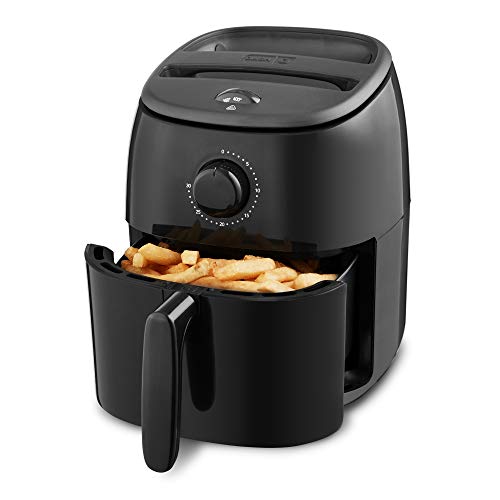
Dash Compact 2 Qt Air Fryer
The smallest practical air fryer on the market, 2 quarts handles one serving of fries, chicken tenders, or vegetables without wasting counter space on an oversized unit. 1000W, which is lower than most air fryers and a better fit for dorm circuits. Auto shut-off, easy-clean basket, and available in colors your student might actually want to look at every day. Around $40-$50. A good starter air fryer for students at permissive schools who want to try cooking without investing heavily in equipment.

COSORI 2.1 Qt Compact Air Fryer
COSORI consistently ranks among the top air fryer brands for cooking performance, and the 2.1 qt compact version brings that quality down to dorm-appropriate size. Precise temperature control (170°F-400°F), 60-minute timer with auto shut-off, non-stick basket, and a smaller footprint than full-size COSORI models. 1200W, check your school’s wattage cap if one exists. Around $50-$65. The right pick for students who are serious about using it regularly and want better results than the entry-level Dash.
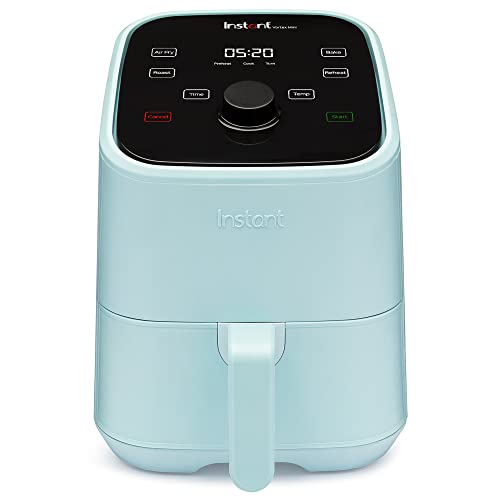
Instant Pot Vortex 2 Qt Mini Air Fryer
For students and parents who want the reliability of a known brand. Instant Pot’s compact 2 qt model delivers the same quality as their larger units in a much smaller footprint. Wide temperature range (120°F-400°F, the low end is useful for keeping food warm), auto shut-off, dishwasher-safe basket. Around $50-$55. Built to last through four years of dorm and apartment use, which makes the higher price point reasonable if you’re buying it once and keeping it through college.
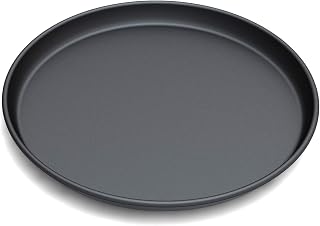
Microwave Crisper Tray / Susceptor Pan
If your school bans air fryers, a microwave crisper tray is the closest widely-permitted alternative. The tray’s susceptor coating absorbs microwave energy and converts it to direct surface heat, browning and crisping the bottom of food the way a regular microwave can’t. Works well for frozen snacks, pizza slices, quesadillas, and anything that needs a crispy bottom rather than a soggy one. Under $20, takes up almost no space, and is compatible with any microwave. Not as effective as a true air fryer but a meaningful upgrade over plain microwave reheating.
See our guide to dorm microwave rules and top picks and the mini fridge guide for the other major appliance decisions before move-in. For the complete list of what to bring, check our dorm packing list.
Safe Use Tips (For Schools That Allow Them)
Never leave it running unattended. This is the rule that gets students in trouble. Air fryers cook much faster than most people expect, chicken tenders that need 12 minutes can start smoking by minute 15 if forgotten. Set a phone timer. Stay in the room.
Clean the basket after every use. Grease buildup in the basket and on the heating element is the primary fire cause with air fryers. Most baskets are dishwasher safe or quick to hand-wash. A basket that goes two weeks between cleanings with daily use is a fire risk. This is especially true in a dorm environment where the smell affects roommates and neighbors.
Don’t overfill the basket. Air fryers work by circulating hot air, if the basket is packed, the air can’t circulate and food cooks unevenly (and the heating element works harder to compensate). Cook in smaller batches for better results and lower fire risk.
Place it on a stable, heat-resistant surface. Not directly on a wood desk or on top of a mini fridge. The outside of an air fryer gets very hot during use, especially the back where the exhaust vents. A heat-resistant trivet or pad under the unit protects the surface and maintains the ventilation clearance the unit needs.
Plug directly into the wall. Same rule as every other high-draw appliance, its own wall outlet, not a power strip shared with the mini fridge or coffee maker.
FAQ
Are air fryers allowed in dorms?
At most schools, no. Air fryers are treated as cooking appliances in the same category as toaster ovens and hot plates, which have been banned in dorms for decades due to fire risk. A smaller number of schools, including Missouri, NC State, and Iowa State, explicitly allow them. Suite-style and apartment-style housing is often more permissive than traditional corridor dorms even at restrictive schools. Always check your specific school’s housing handbook.
What happens if I bring a banned air fryer to a dorm?
Housing staff conduct room inspections, and banned appliances are confiscated. You’ll typically also face a fine (commonly $50-$200) and a housing violation on your student’s record. At schools that strictly enforce appliance policies, this happens regularly during move-in inspections and periodic room checks throughout the year. It’s not worth the risk, save the air fryer for apartment housing.
My school bans air fryers but allows microwaves. Can I get similar results?
For most purposes, yes. A good microwave handles reheating, steaming, egg cooking, and simple meal prep well. For crisped or browned food, a microwave crisper tray ($15-$20) helps significantly, it uses a susceptor coating to brown food surfaces in ways a regular microwave can’t. It won’t fully replicate an air fryer for fresh-cooked items, but it’s a useful tool for the most common use case (reheating pizza and frozen snacks so they don’t go soggy).
What size air fryer is best for a dorm room?
2-2.5 quarts is the right size for a single student in a dorm or small apartment. It handles one serving of most foods, fits on a desk or counter without dominating it, and draws less wattage than larger models. Full-size 4-6 qt air fryers are overkill for one person and take up too much space in a small room.
Do air fryers set off dorm smoke detectors?
They can, even at normal operating temperatures, if cooking fatty or breaded foods. The grease aerosol and smoke that air fryers produce when cooking chicken, fries, or anything breaded is enough to trigger sensitive dorm smoke detectors. This is true even at schools that technically allow air fryers, and a triggered smoke detector means a building evacuation and a very unhappy housing staff. Keeping the basket clean and using it for lower-grease foods reduces the risk.
Can I use an air fryer in a dorm kitchen or lounge?
Possibly, but check the specific policy for that space. Some schools permit cooking appliances in designated kitchen areas that are banned from individual rooms. Others require that kitchenette appliances be school-provided. If your building has a floor kitchen and the policy allows personal appliances there, an air fryer stored in your room and used only in the kitchen is a reasonable middle ground. Confirm with your RA or housing office before assuming it’s allowed.
Is an air fryer worth buying for freshman year?
Only if your school explicitly allows it. If there’s any chance it’ll be banned or confiscated, wait until sophomore or junior year when you’re likely in apartment housing where cooking is expected. An air fryer is a genuinely useful appliance for a college student’s apartment, the same model you’d buy freshman year is still the right tool two years later, and you won’t have wasted a move-in day dealing with a confiscation.
📌 Also see: Dorm Power Strips and Surge Protectors: What Schools Actually Require, every appliance in this guide needs its own outlet or a proper UL-listed surge protector. Here’s exactly what to buy.
📌 Also banned at most schools: Space heaters in dorms, why they’re universally prohibited and what actually keeps your student warm instead.
Know exactly what your student can and can’t bring before move-in day.
The Packing List Generator shows air fryer, microwave, and mini fridge policies for 75+ schools, with a personalized checklist you can print and bring to move-in day.
UniversityParent Team